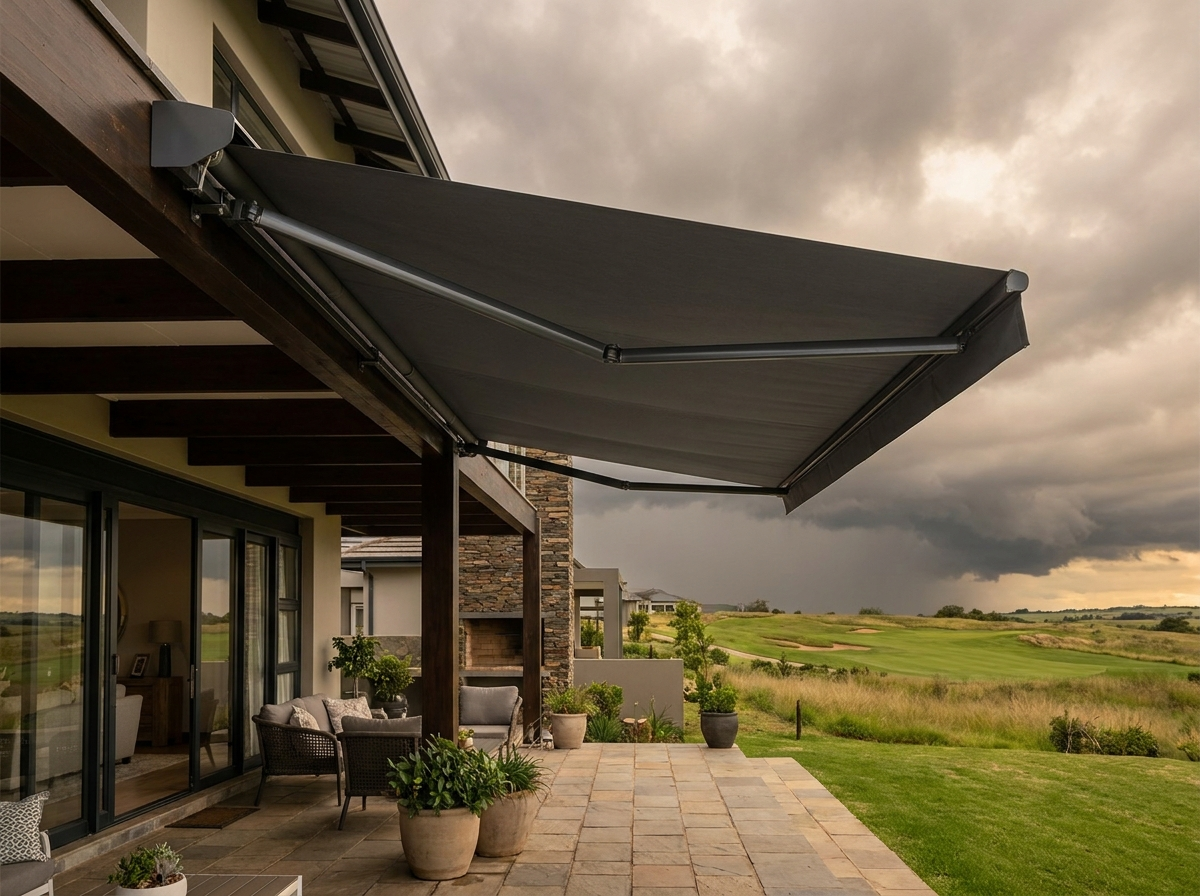
Contemporary Ruimsig golf-estate home with a wide sunscreen roller blind lowered halfway across full-height stacking glass doors, low afternoon sun catching the fairway and jacaranda-lined estate street beyond
Free To Read · No Sign-Up

The Ruimsig Big-Glass Blueprint

A field study of the light on Ruimsig's new-estate streets: where the Highveld sun goes through the year, what it does to each elevation, and what we'd fit where — with the honest catch beside every recommendation.

  • Written for this suburb, every figure sourced at the foot
  • Free in-home measure & a written quote per window
  • Child-safe, cordless controls as standard
Where To Start

A decade of new glass, and not much shade over it yet

Ruimsig barely existed as a suburb of houses before the estate boom of the last decade or so replaced the smallholdings out here on the West Rand. What went up instead is a particular kind of home: open-plan, double-storey, built around a stacking-door wall onto the garden or the fairway rather than a row of separate windows. Roughly six in ten stands now sit inside a gated estate, with bigger, fewer openings than an older suburb — and gardens still too young to throw much shade. A tree planted five years ago isn't doing what a forty-year-old Constantia Kloof oak does; most of the shade a Ruimsig window gets right now, it gets from the blind.

One more honest point before the sun-path numbers: Ruimsig has no single fixed orientation the way a ridge suburb does. Estate homes face the garden, the fairway or the street, whichever way the stand points, so "west-facing Ruimsig homes" isn't really a thing — the walk that matters is around your own house with a compass, not a rule about the suburb.

The Light Here

Twenty-six degrees south, roughly seventeen hundred metres up

Ruimsig has no weather station of its own. The figures below are Johannesburg's, calculated for a latitude within 0.03° of Ruimsig's own — close enough that they apply here directly. Every one is sourced at the foot of this page.

Solar noon sits due north — about 86° up in December, about 40° in June N E S W The afternoon arc 243° in Dec → 295° in Jun 52° of low sun, always late in the day The morning arc 116° → 69° Cool air — glare, not heat Whichever wall sits in the copper arc is the one working hardest.
  1. Near-vertical in December, low and due north in June

    At 86° in December the midday sun does little damage through a north window; by June it's dropped to about 40°, still due north, and lingers there through the middle of the day. One elevation, two different problems, six months apart.

  2. The afternoon sun swings a 52° arc, and it's always low

    Whichever wall sits in that arc takes the brunt of it, and by the time the sun reaches it, it's low — under most eaves, past most overhangs, straight into the room.

  3. Mornings are the mild half of the day

    A wall in the morning arc gets hours of low sun while the air is still cool — a glare-and-waking problem more than a heat one.

  4. Storms and hail arrive in the same hour as the heat

    South African hail concentrates on the Highveld and is most frequent from mid-November to February, peaking in the afternoon. That's the same stretch of the day the hot-side glass is working hardest — and on a weekday, often the hour the house stands empty. Anything mounted outside the glass needs to get itself in without you.

  5. Altitude buys extra ultraviolet, whichever way you're facing

    Ruimsig sits somewhere around 1,700m — sources for the area put it anywhere from about 1,580m to 1,740m depending on the exact point measured, so we won't pretend to a precision nobody has. What's not in question is the World Health Organization's figure: UV intensity rises roughly 10% for every 1,000m of altitude. That's a fading argument as much as a comfort one — it takes the colour out of a couch arm and, eventually, out of the blind itself.

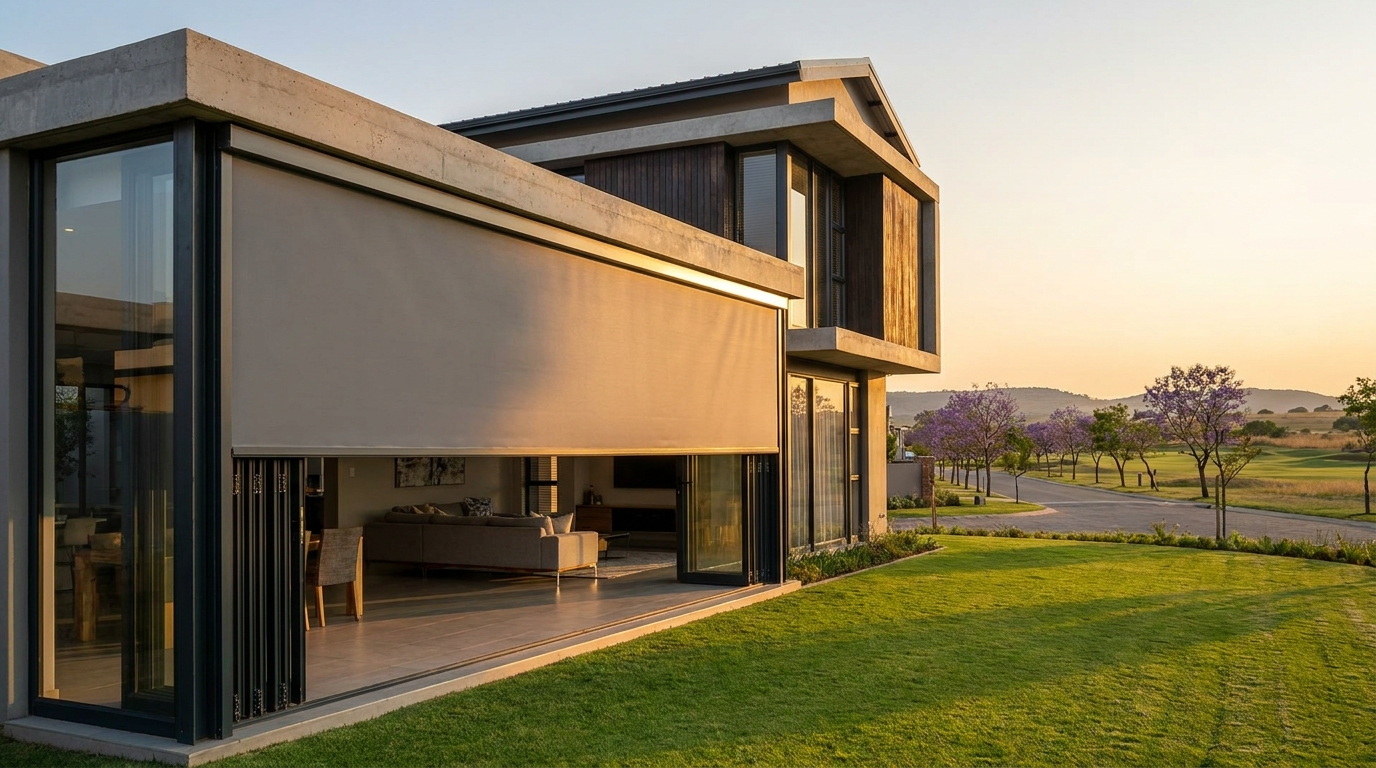
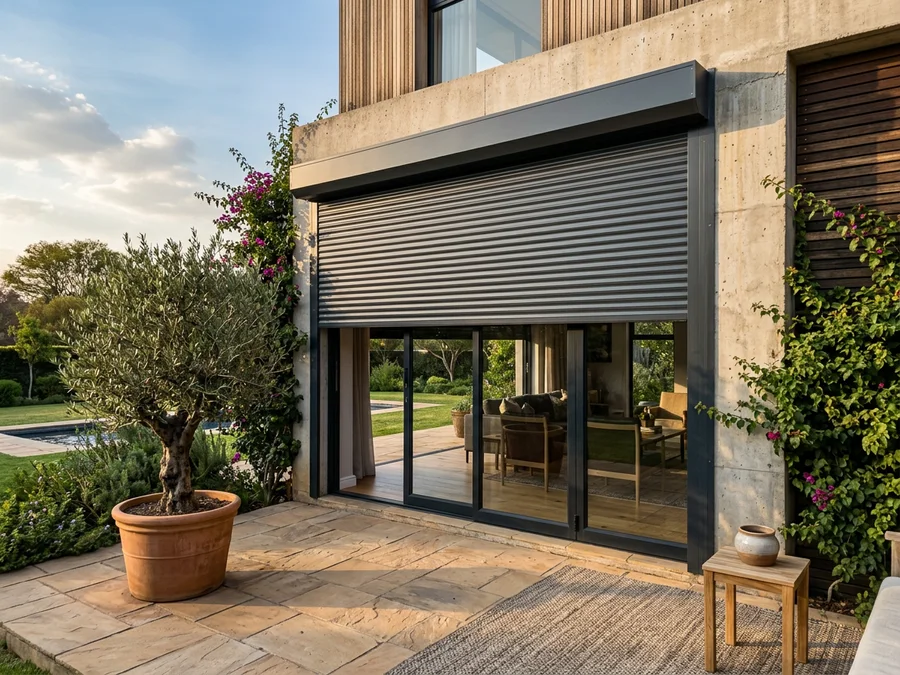
External aluminium roller shutter rolled halfway down over wide west-facing glass stacking doors on a face-brick Ruimsig estate home, golf fairway visible beyond young trees

A low sun is a sideways problem.

A blind that only travels up and down has one answer to a four-o'clock sun: cover the window and lose the room. Something that closes down from outside the glass entirely has a better one.

Room By Room

Your house has an orientation. The suburb doesn't.

Walk your own place with a compass at about four in the afternoon and note which wall the sun is actually on — that tells you more than any rule about "Ruimsig homes" would.

  1. North — the free heating worth keeping

    December sun barely reaches into a north-facing room; by June it reaches several metres in. An eave or a first-floor slab does real work here — blacking the wall out permanently throws away the cheapest heating in the house.

  2. Whichever wall catches the 52° arc — where the money belongs

    This is the view side more often than not in Ruimsig — the fairway, the garden, the pool. Low sun gets in under the eave, so overhead shade barely helps. If one elevation in your house deserves the better spec, it's this one.

  3. The mirror wall — same geometry, smaller bill

    Early, low sun while the air's still cool. A bedroom on this wall is a blockout conversation for the sake of sleep; a breakfast room usually isn't, because there the sun is the whole point.

  4. The quiet wall

    The wall opposite the hot one catches the least of the year's sun. Sometimes the honest answer here is to spend nothing at all.

  5. Double-volume glass over the entrance

    A void isn't just a tall window — it behaves like a chimney, heat gathering at the top where nobody can reach a blind by hand. Anything above about three metres is a motor conversation before it's a fabric one.

What We'd Fit, And Why

The reasoning — and the honest catch with each

Nothing here is right on every wall, and each one costs you something, so the catch sits right beside it. Press Add to my window list and it carries down to the form at the foot of this page.

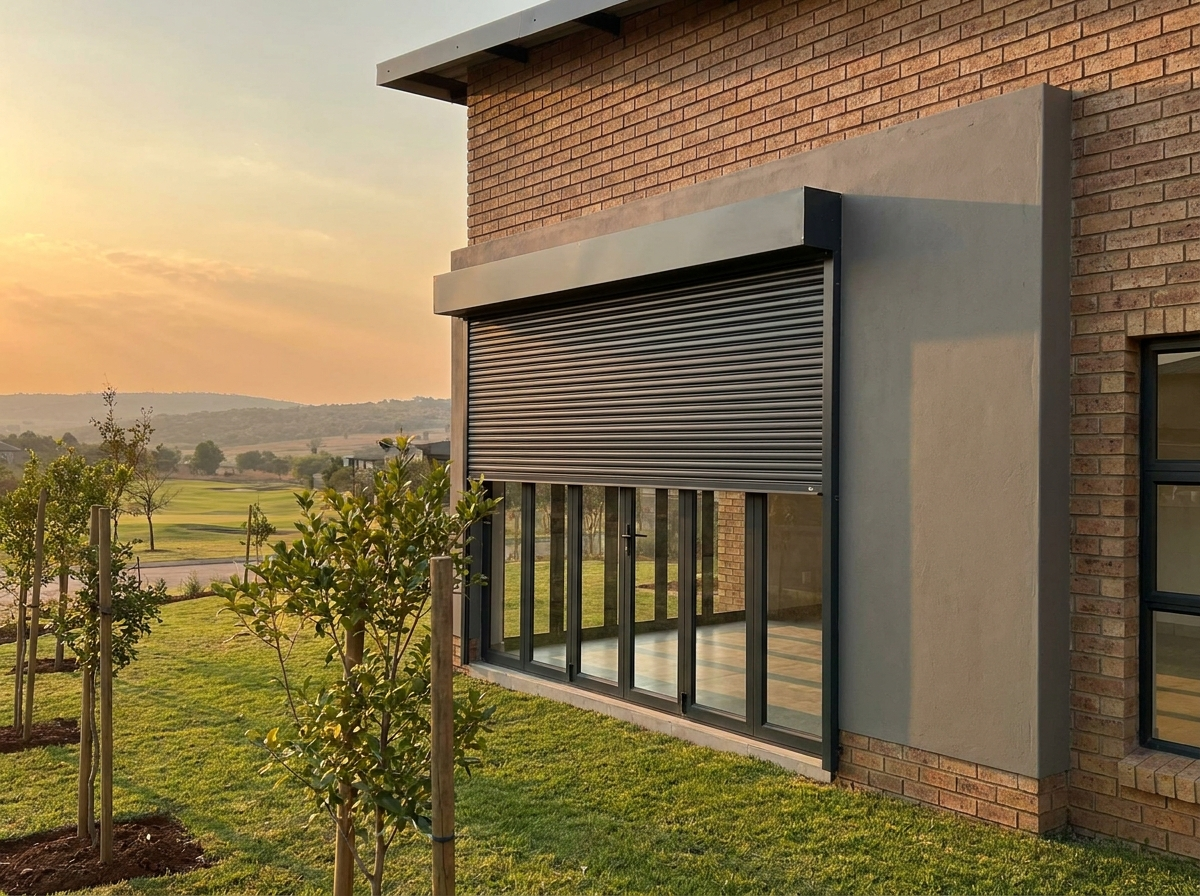
Bedroom window in a new-build Ruimsig home fitted with a flat blockout roller blind, no folds, lowered for true morning dark with a sliver of fairway view at the edge

Roller blinds — sunscreen and blockout

Best on: the hot wall's living glass · bedrooms

A 3–5% sunscreen weave cuts glare and UV while the view stays visible; blockout does the opposite job on one flat sheet — genuine dark, no folds. A view-facing bedroom usually wants both on one bracket, and a wide stacking-door wall needs a join line or a linked, motorised run past about 3m.
Day/night (zebra) blinds

Best on: street-facing rooms · guest suites

Sheer and solid bands slide past each other, moving from open view to privacy without raising the blind — though it's never a true blockout, and the banding reads as a strong pattern against plain new-build walls.

Cellular (honeycomb) blinds

Best on: the room above the garage · west bedrooms

Air trapped in hexagonal cells insulates both ways — a garage roof that's absorbed a full afternoon, a cold July night — though it's the wrong side of the glass for a genuinely hard sun, since it only slows heat already through the pane.

Venetian blinds

Best on: kitchens & bathrooms (aluminium) · studies & living rooms (timber)

A slat tilts rather than just going up or down, so the beam stops while the room stays bright — though it stacks deeper than a roller when raised, and every slat collects Highveld dust.

Vertical & panel blinds

Best on: wide stacking doors and full-height glass

Rotating vanes or wide panels cover a wide opening edge to edge, built for the four-metre sliders these estates run — but vanes swing in a draught, and a panel needs clear wall to stack onto.

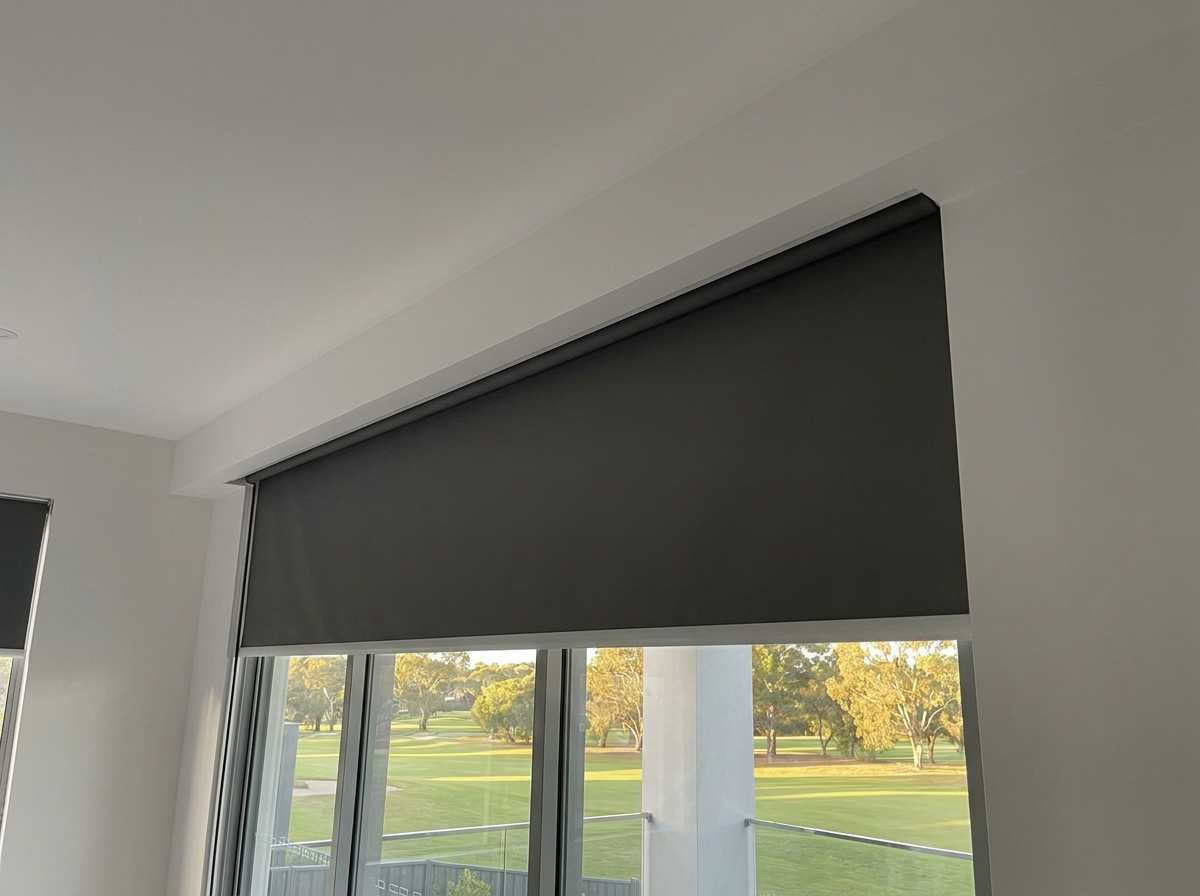
Close-up of a concealed ceiling blind box recessed above a wide stacking glass door in a modern Ruimsig estate home, a flat blockout roller blind dropping from the hidden slot with no visible hardware

Concealed & recessed blinds

Best on: homes still being built or renovated, before the ceiling closes

Fabric drops from a slim ceiling slot and the hardware disappears — on the frameless glass a lot of new Ruimsig homes carry, it's the one detail that doesn't argue with the architecture. It has to be decided at drawing stage, though; retrofit means a slim surface cassette instead, no longer invisible.

Skylight & shaped blinds

Best on: gable glass and skylights over double-volume entrances

A guided side-track holds the fabric's line on angled roof glass instead of letting it sag — common over these entrance halls, though shaped openings get templated on site, not measured off a plan.

External aluminium roller shutter rolled part-way down over patio doors on a Ruimsig home

Roller shutters

Best on: the wall that catches the 52° arc, especially with no overhang

Rigid aluminium slats close down from a headbox outside the glass, stopping the sun before it reaches the pane. An interior blockout kills the glare, but the glass behind it still heats and radiates into the evening — a shutter never gives it the chance. It's the dearest answer here in relative terms, and wants a motor plus a wind strategy through hail season, not a fixed one.

Shading, not security. Specified for sun, heat, glare and daytime privacy outside the glass — not a security-rated shutter, which is a different product, available on request.

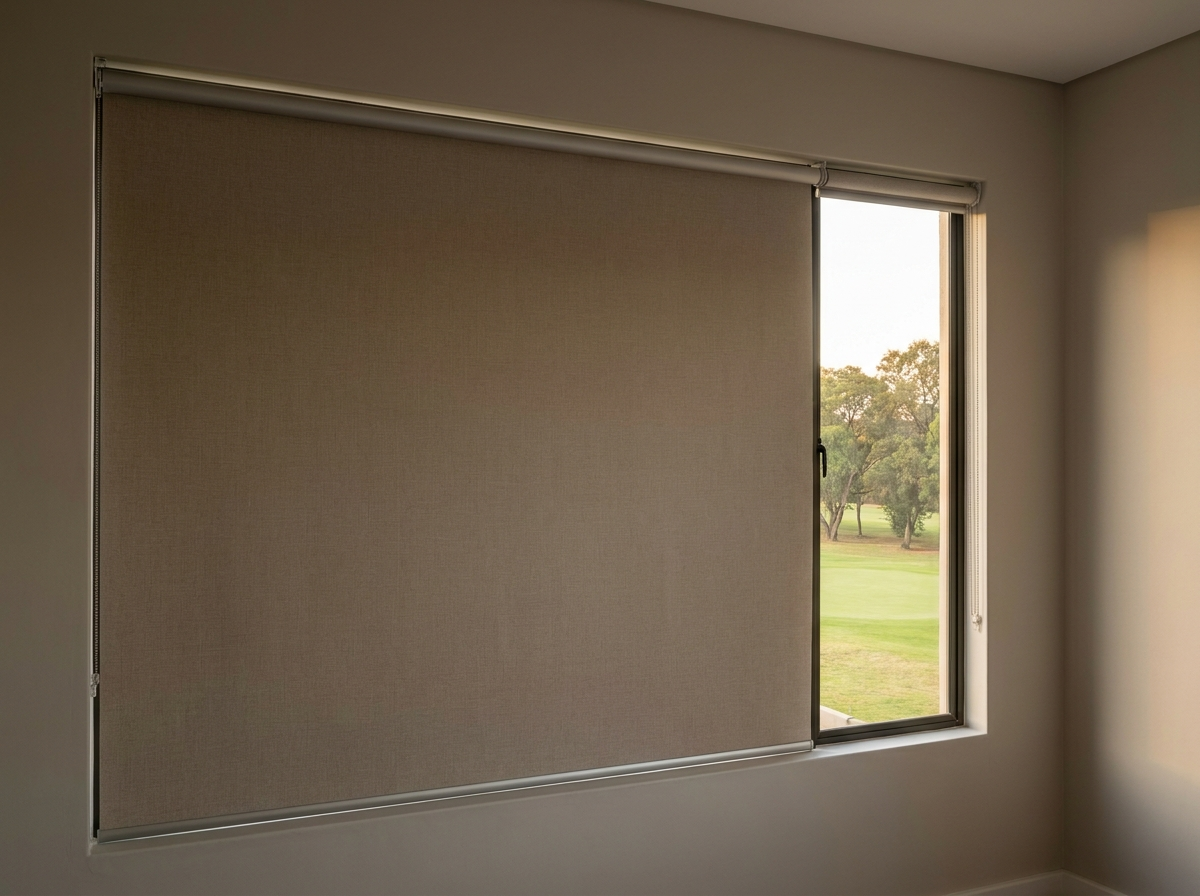
Folding-arm awning extended over a Ruimsig estate patio, dark storm clouds gathering over the golf-estate grassland behind it

Folding-arm awnings & zip screens

Best on: the patio, the braai side, the pool deck

An awning shades a patio with nothing standing in the way, folding back the moment you want winter sun again. A zip screen does a different job — mesh under tension in side channels, holding shape in wind while the garden stays visible. Through hail season, wind and hail ratings are engineering limits, not marketing — an exposed patio gets a motor and a wind sensor, not a cheaper manual one.

Motorised blinds & automation

Best on: wide stacking-door runs, double-volume glass, anything you can't reach

One remote, keypad or app runs a whole wall of glass and removes cords entirely — the safest option with small children — but it needs power routed to the right place: simple while a home's still being built, fiddlier once the ceiling's closed.

Motorised curtain tracks

Best on: bedrooms and formal living rooms

Curtains glide open on remote, schedule or touch, for a room where fabric curtains are the look but a heavy hand-pull isn't — though retrofitting a track where blinds were designed in is the bigger job.

Not sure — or something already installed elsewhere?

Best on: most houses, honestly

Plenty of windows need nothing at all — the hard part is telling which, a judgement made standing in the room at the hour that hurts. An older blind that's stopped working often gets repaired rather than replaced.

Optional

Want this Blueprint marked up for your own house?

Tell us which rooms or elevations are the problem and we'll send it back with notes against your actual walls — what we'd start with, what we'd leave alone. No visit involved, no obligation.

We use these details only to send you the marked-up Blueprint and, if you ask for it, to arrange a consultation call-back (POPIA). No marketing lists, never shared with a third party.

Before Anything Goes On The Outside

Estate rules, and where this page's certainty runs out

Roughly six in ten Ruimsig stands sit inside a gated estate, and every one we've worked in runs some form of architectural or building committee — a body that checks new work, colours and street-facing finishes against the estate's own guidelines before anything gets installed. We looked for a published copy of any one estate's actual rulebook and couldn't find one; those documents sit with each body corporate, not in the public domain, so we won't pretend to know your estate's specific clauses. What we will do is raise it at the free measure, and match fascias, cassettes and exterior colours to whatever's approved before anything goes on order.

The distinction that matters: a blind fitted inside the room changes nothing about how the house reads from the street. Anything mounted outside — a shutter headbox, an awning cassette — is an exterior alteration, worth checking with your estate first. In Constantia Kloof, built up well before the estate boom, the constraint runs the other way: no committee to satisfy, but window openings that were never standardised, so a made-to-measure fit matters more than an approved colour.

The Honest Limit Of Any Guide

Four things only a tape measure at the window settles

Everything above narrows the field. These four decide it — and all four are exactly what the free measure is for.

  1. True reveal depth, and whether the opening is square

    New-build plaster settles in its first year or two, and reveals vary wall to wall even in the same room — depth decides whether an inside mount is even possible.

  2. What's already fixed above the glass

    Many stacking-door walls arrive with an aluminium reveal or a builder's track already above the frame — whether a cassette or a concealed slot fits depends on the clearance that's actually there.

  3. How exposed that specific wall really is

    Open grassland still runs along the M47 and between newer estate phases — a wall backing onto it catches more wind through hail season than one tucked behind a neighbour.

  4. Where the power for a motor can run

    Simple on a home still being built; fiddlier once the ceiling's closed and plastered. A roof void solves it more often than not, but that's a call made standing under the actual roof, not read off a floor plan.

Two Ways Forward

Have us come and measure — or get a range first

Both start on the one short form below.

Recommended

The free expert measure & written quote

A consultant comes to you with samples, measures every opening precisely, walks the wall that's actually giving you trouble, and leaves a written quote itemised per window. Free, with no obligation.

We take five or six measure appointments a week across this area, so the diary tends to fill early. Book ahead if you need a particular day.

Book my free measure

Optional

Want a ballpark first?

Pop in rough sizes and we'll send a budget range by the next working day. Not sure how to measure? Leave it out — our consultant measures for free either way, and that's where exact per-window pricing comes from.

Open the window list
The Close

Book your free expert measure

One short form. Want a budget range too? Add rough window sizes underneath — entirely optional, and nobody will chase you for it.

What you're interested in (anything you added above is already ticked)
Optional: add rough window sizes for a budget range

Rough really is fine — a tape across the outside of the frame is enough, and we'll send a budget range by the next working day. If measuring isn't your idea of a Saturday, skip this entirely: the free measure gives you exact per-window pricing anyway.

Your window list — room, width, drop, mount and product for each window
Room Width (mm) Drop (mm) Inside or outside the reveal Product Remove

Nothing on the list yet — and that's completely fine.

Your details are used only to arrange this consultation call-back and, if you've added sizes, to send your budget range. They're never shared with any third party (POPIA).

Sources

Where the numbers on this page come from

Every sun-path, climate, suburb and estate figure above is taken from the following. Ruimsig has no weather station of its own, so all climate figures are Johannesburg/Highveld-wide and the solar angles are calculated for Johannesburg. Where something couldn't be verified, we said so rather than round it into a sentence.

Two honest caveats: no published rulebook for any specific Ruimsig-area estate exists to cite, so the guide describes the general pattern of committee sign-off rather than one estate's actual clauses; and Roodepoort's elevation varies by several hundred metres depending on the point measured, so we used the higher end of that range rather than false precision. Reading this from a neighbouring estate? The same reasoning applies across Eagle Canyon, Featherbrooke, Northcliff and Constantia Kloof — it's the housing stock and the exposure that change.